


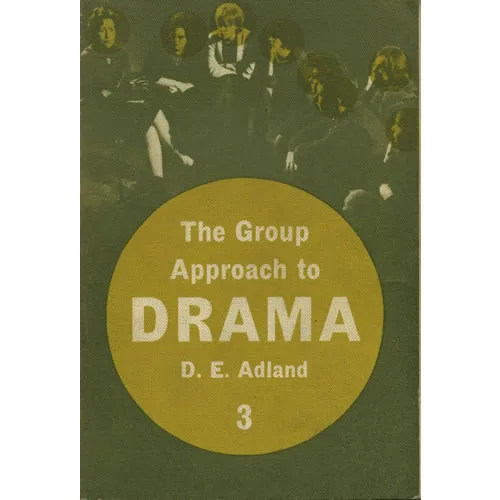
The Group Approach To Drama 3
Publisher: Longmans
ISBN: none
Once upon a time, in a decade that loved its paisley patterns and questionable hairstyles, DE Adland brought forth a tome to the world that was equal parts instructional manual and the very essence of a group therapy session gone awry. Enter "The Group Approach to Drama 3," a title that tantalizingly suggests there are at least two other editions lurking about, probably gathering dust in the corners of intellectual attics or under the watchful gaze of bemused cats.
This is not just a book; it’s a curious artifact from 1965, a time when people believed that slapping "group" in front of any word made it inherently better. Be it groupthink, group hugs, or group therapy, the ’60s was a decade obsessed with the collective, and DE Adland was evidently riding that wave like a reluctant surfer on a very large group board. Get ready to embrace the wild world of drama, where the true stars are not the actors but the bewildered participants and their often-conflicted emotions.
As an embodiment of a misunderstood educational philosophy, this book caters to the avant-garde drama enthusiasts who loved to assemble in huddled circles, clad in turtlenecks, discussing the deeper meanings of existential despair through interpretative dance. Think of it as a self-help book but for theatre nerds, where one man’s catharsis becomes another man’s awkward silent stares. You can practically hear the muffled sighs and uncontrollable giggles echoing through the pages.
The table of contents—if you are fortunate enough to find a copy with it still intact—might read like a fever dream of offbeat drama activities, including but not limited to:
- Overanalyzing that one awkward silence
- Roleplay therapy with a twist (no actual therapy involved)
- How to interpret Shakespeare as a modern-day psychiatrist
- Group improvisation: where chaos reigns supreme
- Fabulous costumes made from last season’s curtains
While some may view this book as an eccentric relic of its time, others might find it an amusing reflection of a simpler age—when drama was less about the glitzy stardom of the West End and more about existential crisis in a dimly lit room filled with confused faces. The aims and objectives of this ‘group approach’ could be likened to those of a wobbly tower made from Jenga blocks: precarious, unpredictable, and likely to collapse with the slightest provocation.
Condition: Used, yet somehow managing to radiate the fresh scent of nostalgia and the faintest whiff of old coffee. Pages may have yellowed slightly, as if they’ve also been pondering the meaning of life over a cup of mediocre tea. There may be notes in the margins—perhaps insightful, perhaps an unending stream of existential dread written by a previous owner who spent too long in a group drama session. The cover has undoubtedly seen better days but retains an air of dignity, like a retired actor trying to remember their lines.
So, if you find yourself yearning for a time when drama was less about blockbuster hits and more about group dynamics, this book will perfectly fit your collection of oddities. It’s an experience waiting to be had, one that may evoke laughter, confusion, or mild irritation—depending on your tolerance for the avant-garde. Search high and low through your dusty shelves, or consider visiting Crappy Old Books to score this quirky piece of theatre history. You might just walk away with a sense of community—or at the very least, a slightly raised eyebrow.
Keep browsing: See more Academic books Other books by DE Adland
